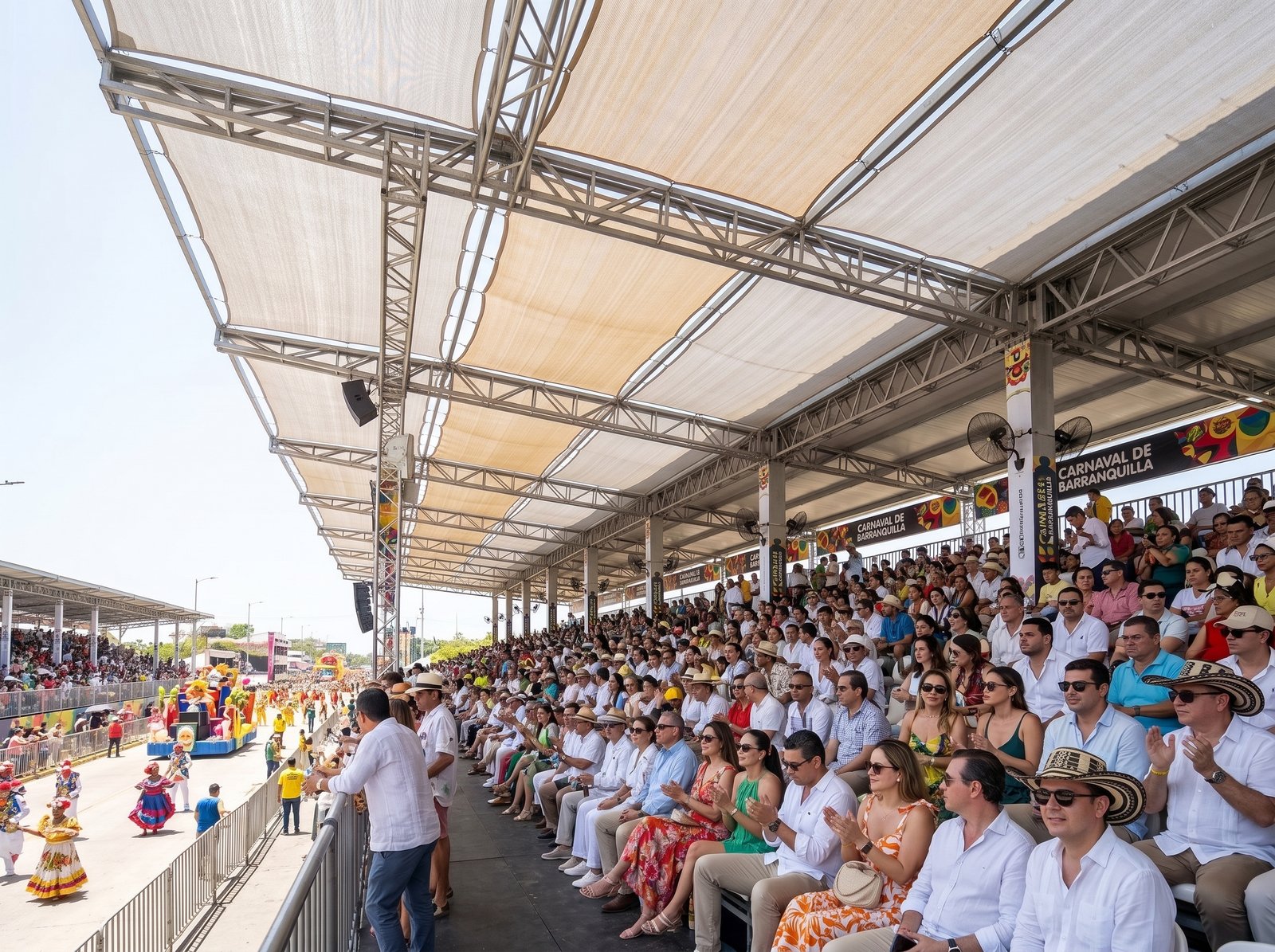
The true magic of the Barranquilla Carnival stems from the legendary characters, traditional dance guilds, and satirical costumes that bring the streets to life. Designated by UNESCO in 2003 as a Masterpiece of the Oral and Intangible Heritage of Humanity, this Caribbean festival embodies an extraordinary syncretism uniting Indigenous, African, and European cultural roots. Understanding the stories behind these characters will completely transform how you experience the parades.
1. La Marimonda: The Ultimate Symbol of Barranquilla Satire
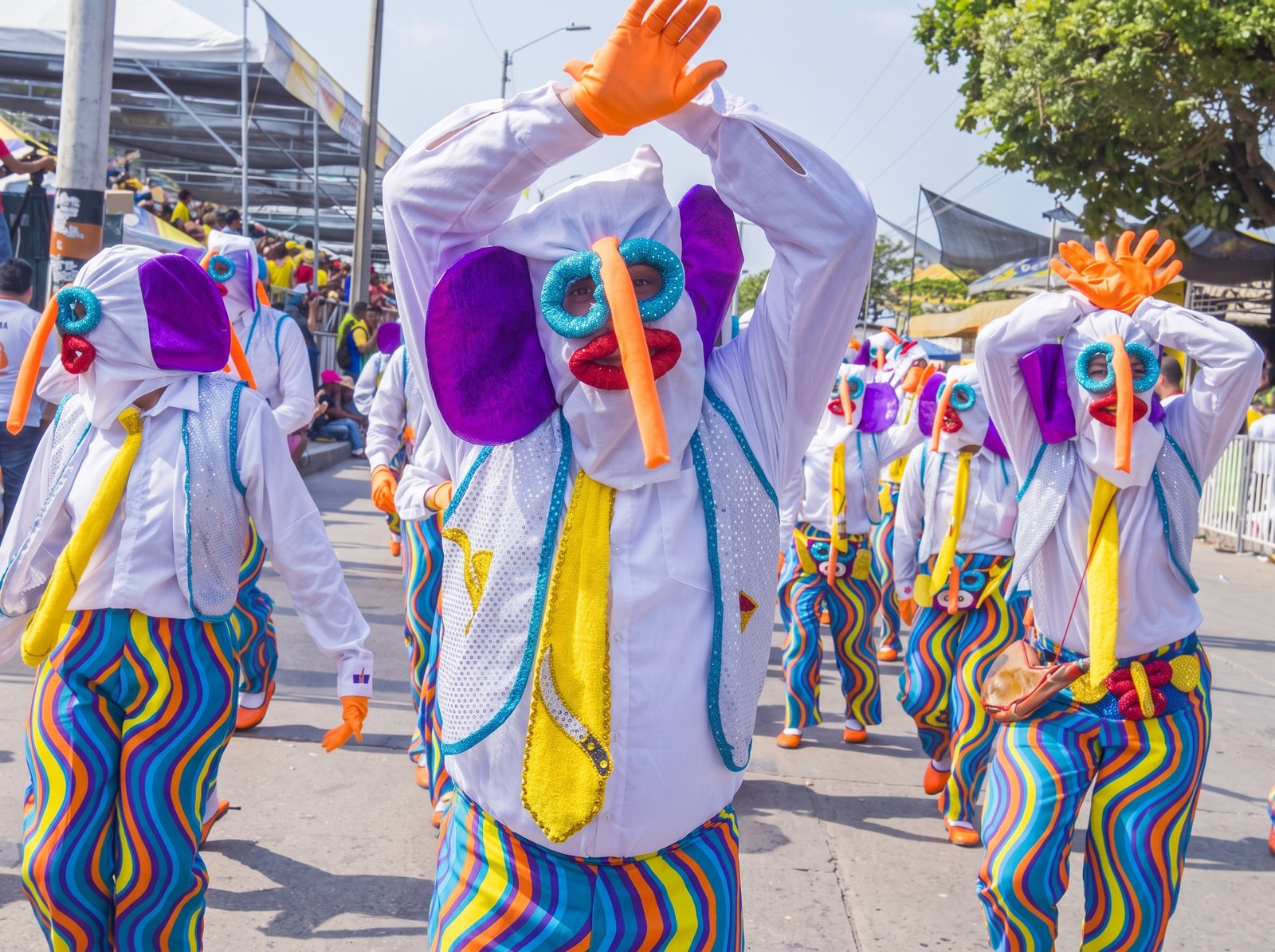
The Marimonda is the only costume born and bred exclusively in Barranquilla. Created in the late 19th century in working-class neighborhoods, it emerged as a cheeky, rebellious mockery of the city’s economic and political elites.
- Distinguishing Features: A mask featuring an exaggerated floppy phallic nose, massive elephant-like ears, bulging eyes, and a comical necktie paired with a jacket and trousers worn completely inside out.
- The Personality: The Marimonda prances down the avenue making funny faces, taking awkward leaps, blowing a high-pitched noisemaker (the pito de totumo), and teasing spectators to ignite laughter.
2. El Monocuco: The Guardian of Anonymity and Courtship
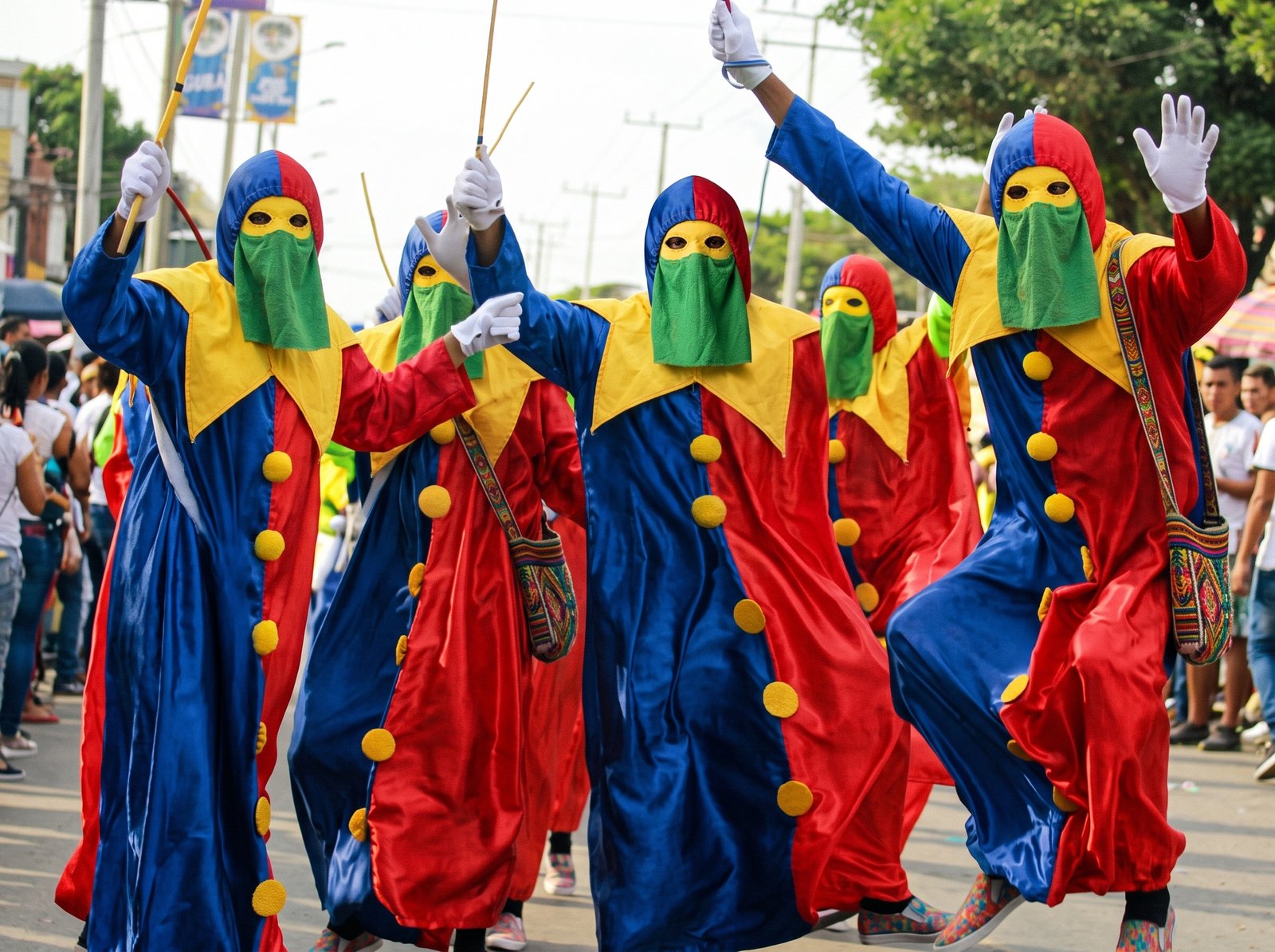
With medieval European roots, the Monocuco is the personification of festival anonymity. In colonial and early republican eras, it allowed citizens of all social strata to mingle without fear of gossip or class judgment.
- Distinguishing Features: A flowing hooded gown made of shimmering satin, a face-concealing eye mask, and a delicate wooden wand.
- The Gameplay: The Monocuco disguises their voice in a falsetto pitch, playfully teasing passersby with the traditional chant: «¡A que no me conoces!» (I bet you don’t know who I am!).
3. The Dance of the Little Bull (El Torito) & Congo Grande
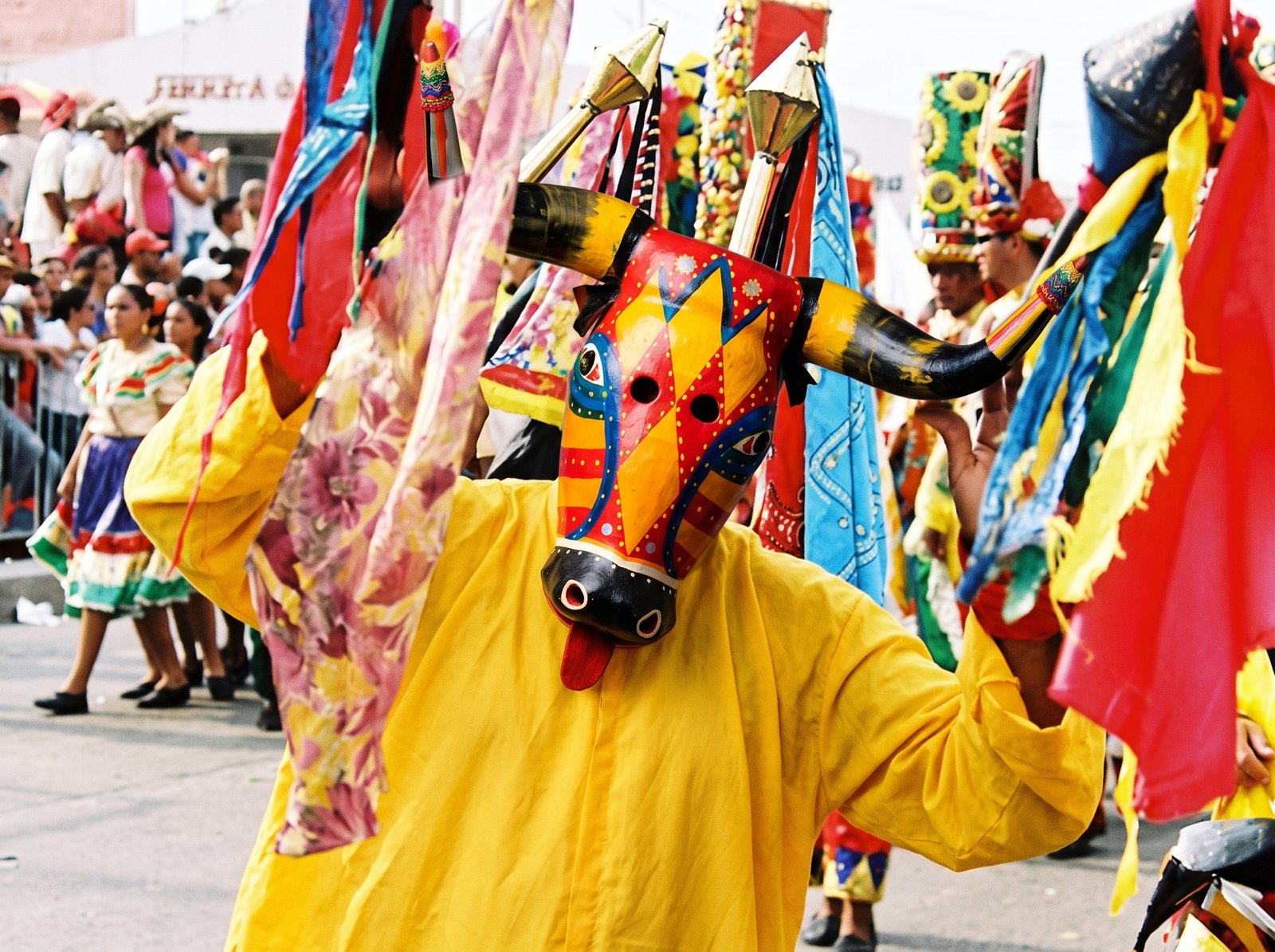
The Congos are the oldest and most venerated dance guilds in Carnival, with historic dynasties like the Danza del Torito Ribeño (founded in 1878) and the Congo Grande de Barranquilla (1875). Their origins reflect traditional African warrior brotherhoods and riverside cattle-ranching culture along the Magdalena River.
- Distinguishing Features: Shimmering satin tunics, richly embroidered capes (golas), and an imposing cylindrical turbante headdress crowned with colorful paper flowers, mirrors, and long ribbons cascading down the back.
- The Bull Mask: Dancers hold hand-carved wooden bull masks with authentic cattle horns, symbolizing bravery, pastoral vigor, and cultural resilience.
4. King Momo (Rey Momo): The Male Monarch of Joy
Inspired by the Greek god Momus (the patron of mockery, satire, and humor), King Momo is the male monarch who presides over Carnival alongside the Queen. Rather than a superficial contest, King Momo is selected annually from among master artisans, folkloric directors, or cumbia leaders who have dedicated decades of their lives to safeguarding Colombian cultural heritage.
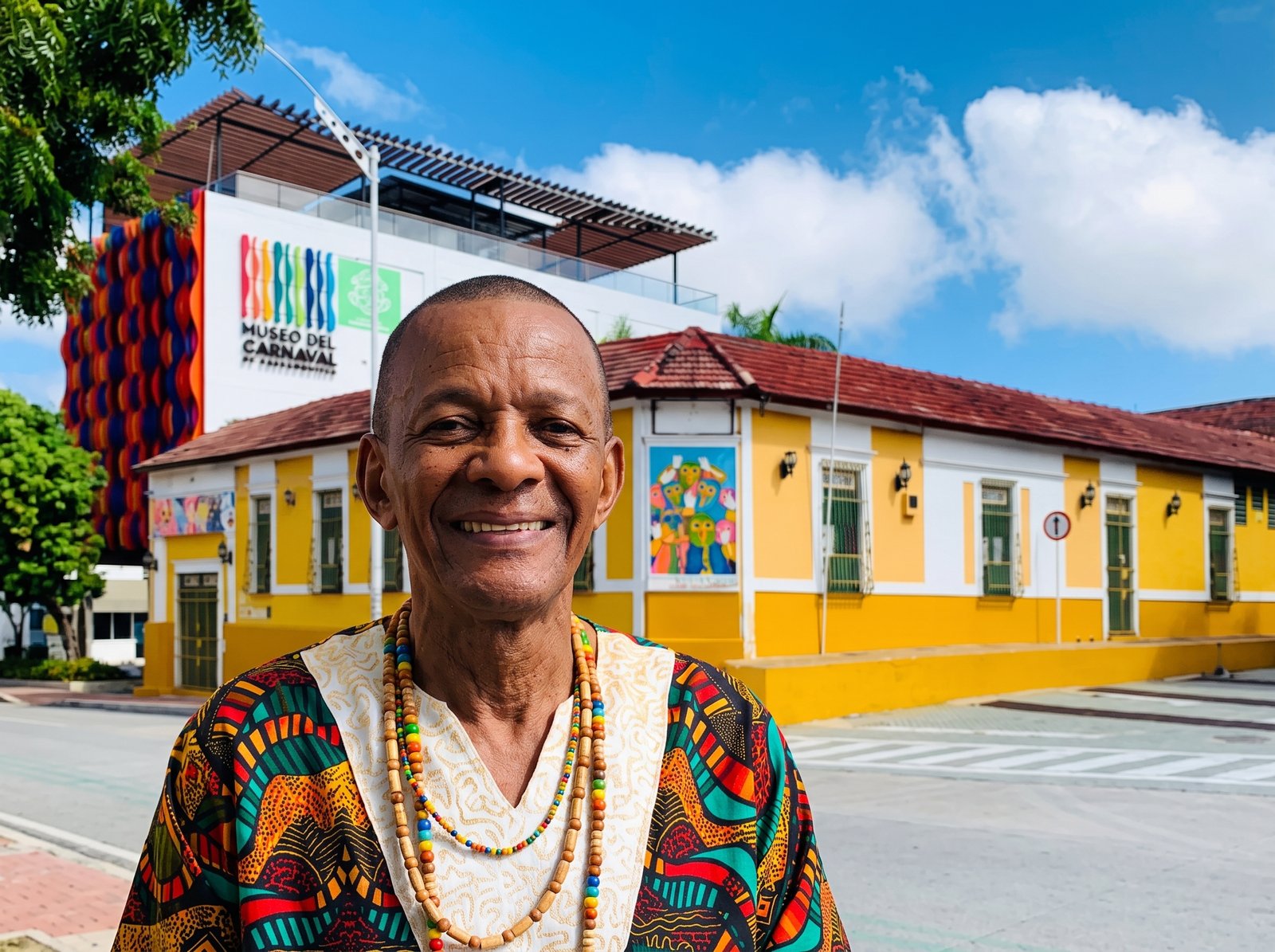
Meet the Artisans on the Barrio Abajo Tour
Want to step inside the artisan workshops where wooden Torito masks and Marimonda costumes are brought to life? On our guided cultural walking tour through Barrio Abajo and the Carnival Museum, you will experience the living history of the festival alongside local tradition-bearers.
Explore the Barrio Abajo Tour